
- Home
- Life at ATA
- Information for Parents
- Reporting
Reporting
Each student receives a written report four times a year: November, January, April and July.
Each report includes:
Attendance and punctuality
- Attendance so far this year
- Number of times the student has arrived late to school
Subject information
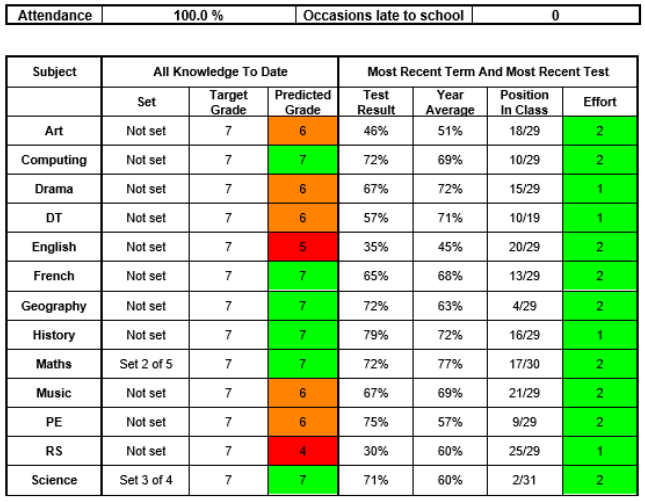
For each subject, the report shows:
- Set – In Year 7, most subjects are not set. As students progress into Year 8 and beyond, they will be placed into sets for most subjects.
- Target GCSE grade – This is an ambitious grade based on Year 6 SATs, Cognitive Ability Tests, Wandsworth tests and teachers’ professional judgement. Reaching this target shows strong performance.
- Predicted grade – The grade the teacher believes the student is likely to achieve by the end of Year 11, based on classwork, homework and test results.
- Most recent test result – The student’s score in the latest test.
- Average test result – The class average, shown for comparison.
- Position in class – How the student performed in the test compared with others in the class. Students consistently at the top or bottom may move up or down sets.
- Effort grade – A score from 1 to 4 that reflects effort across the year:
- 1 = Excellent
- 2 = Good
- 3 = Poor
- 4 = Serious concern
How Parents and Carers Can Use Reports to Support Progress
- Talk through the report calmly and positively, praising successes and discussing any concerns without blame.
- Focus on effort as well as grades. Improving effort often leads to better results over time.
- Set clear, achievable goals together, such as improving an effort grade in a particular subject or preparing better for tests.
- Agree practical steps, for example:
- Completing homework on time
- Revising little and often
- Organising equipment the night before
- Staying focused in lessons
- Track progress over time by keeping all reports in one folder and comparing them across the year.
- Contact teachers if needed, especially if effort grades are low or predicted grades drop, to ask how best to support learning at home.
Used regularly, school reports can be a powerful tool to help students reflect, improve, and build good learning habits
Here is an example of a report:
Students will also receive a Parent Response Form alongside their report. Please complete this form for your child to return to their form tutor.